Welcome to SBC Testing

Over the years, my work in residential energy testing, building performance, and high-performance construction has grown across a number of different projects. This website is intended to bring that work together in one place.
Some people may already know my work through MWV Blower Door Test, where I have focused on blower-door testing and residential air-leakage diagnostics. Others may have come across the work I documented while building 18 Woodland Grove in Conway, New Hampshire, a high-performance home designed around the principles of the Pretty Good House approach.
The goal of SBC Testing is to combine those experiences and provide a place where homeowners, builders, contractors, and anyone interested in better-performing homes can learn more about building science, testing, diagnostics, and practical ways to improve residential comfort and efficiency.
What I Do
My work focuses on understanding how a home actually performs, rather than simply how it was designed to perform.
A house is a system. The insulation, air barrier, windows, heating and cooling equipment, ventilation, moisture control, and occupant behavior all interact with one another. Testing helps identify where those systems are working properly and where problems may exist.
Some of the services I offer include:
Blower Door Testing
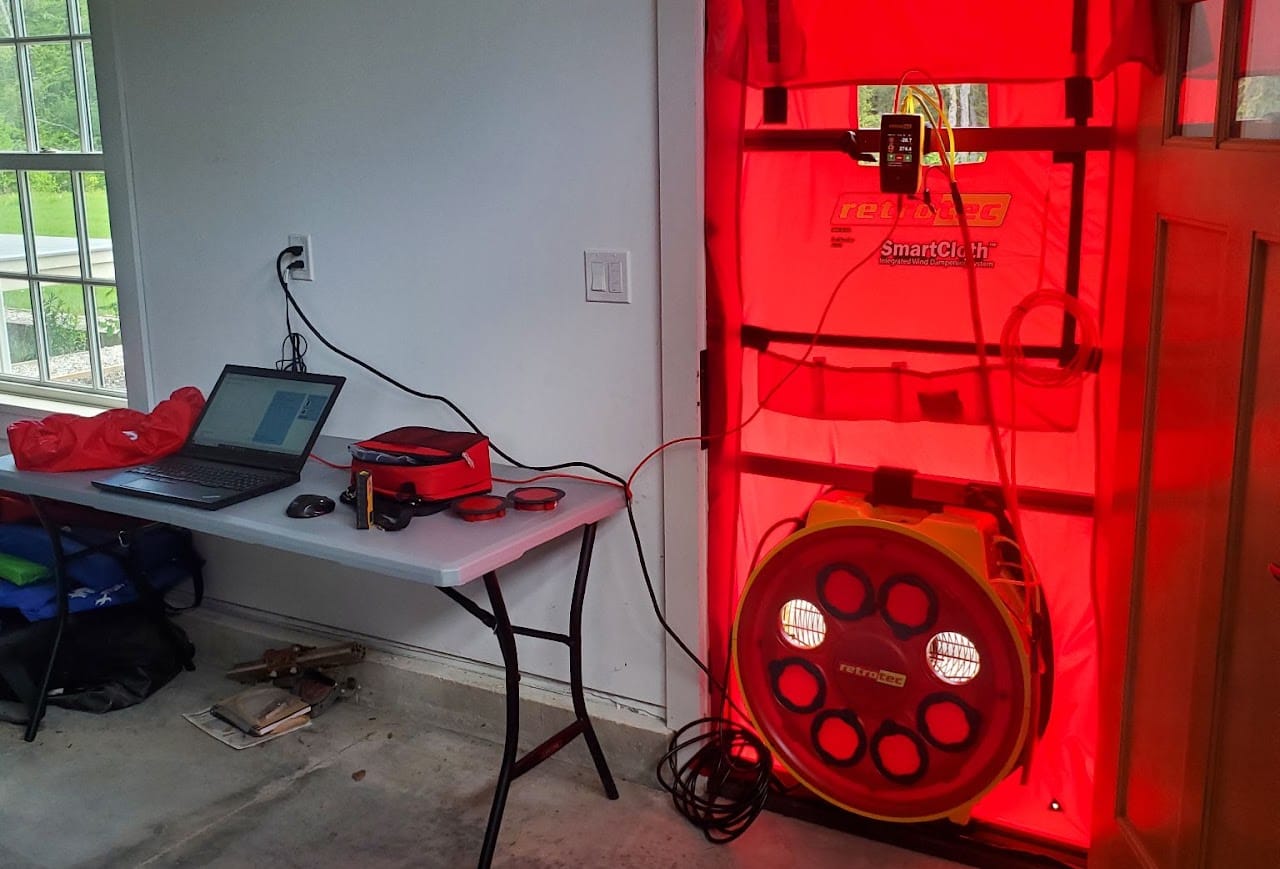
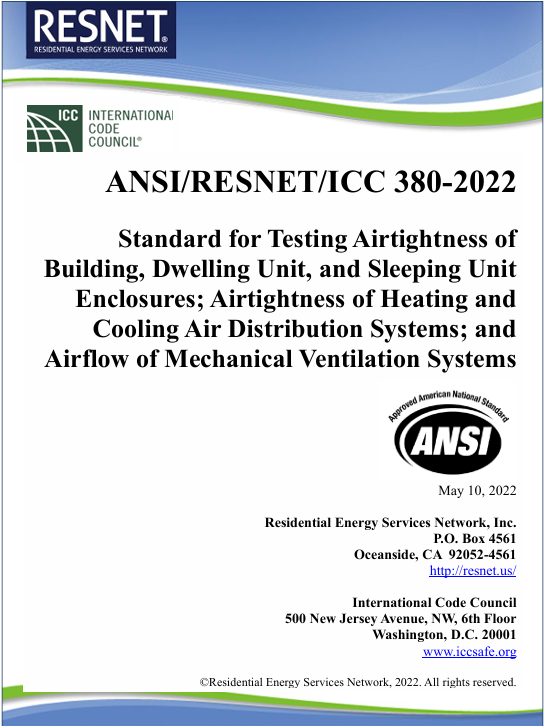
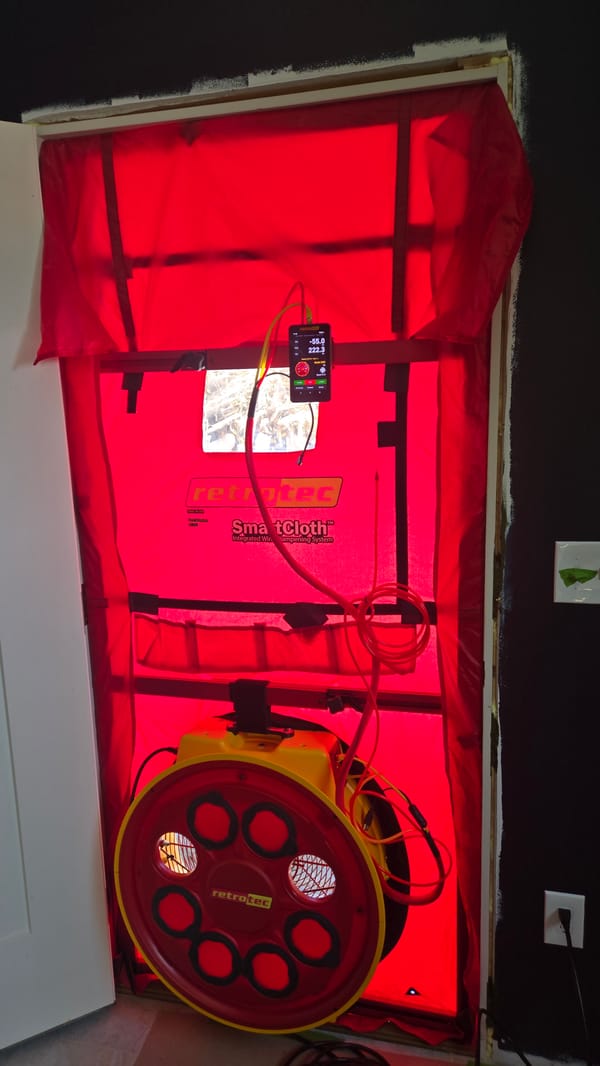
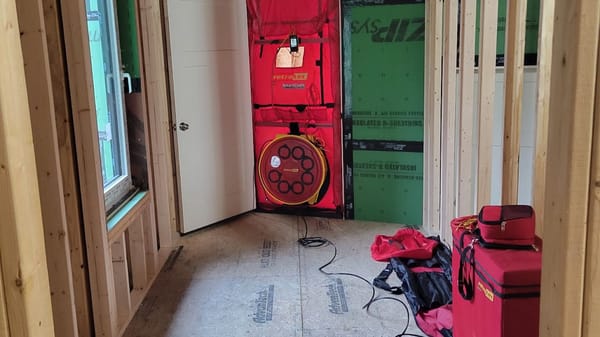
A blower door test measures how much air leaks through the building envelope.
By temporarily installing a calibrated fan in an exterior doorway, the house can be depressurized and the amount of uncontrolled air leakage measured. This testing can help identify excessive leakage, verify construction quality, assist with energy-code requirements, and provide valuable information when diagnosing comfort or moisture problems.
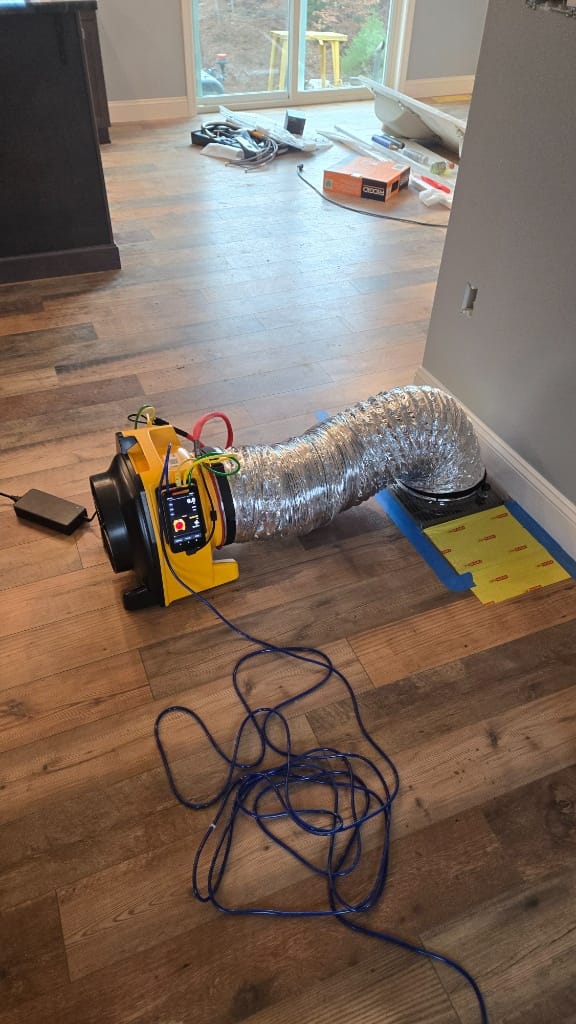
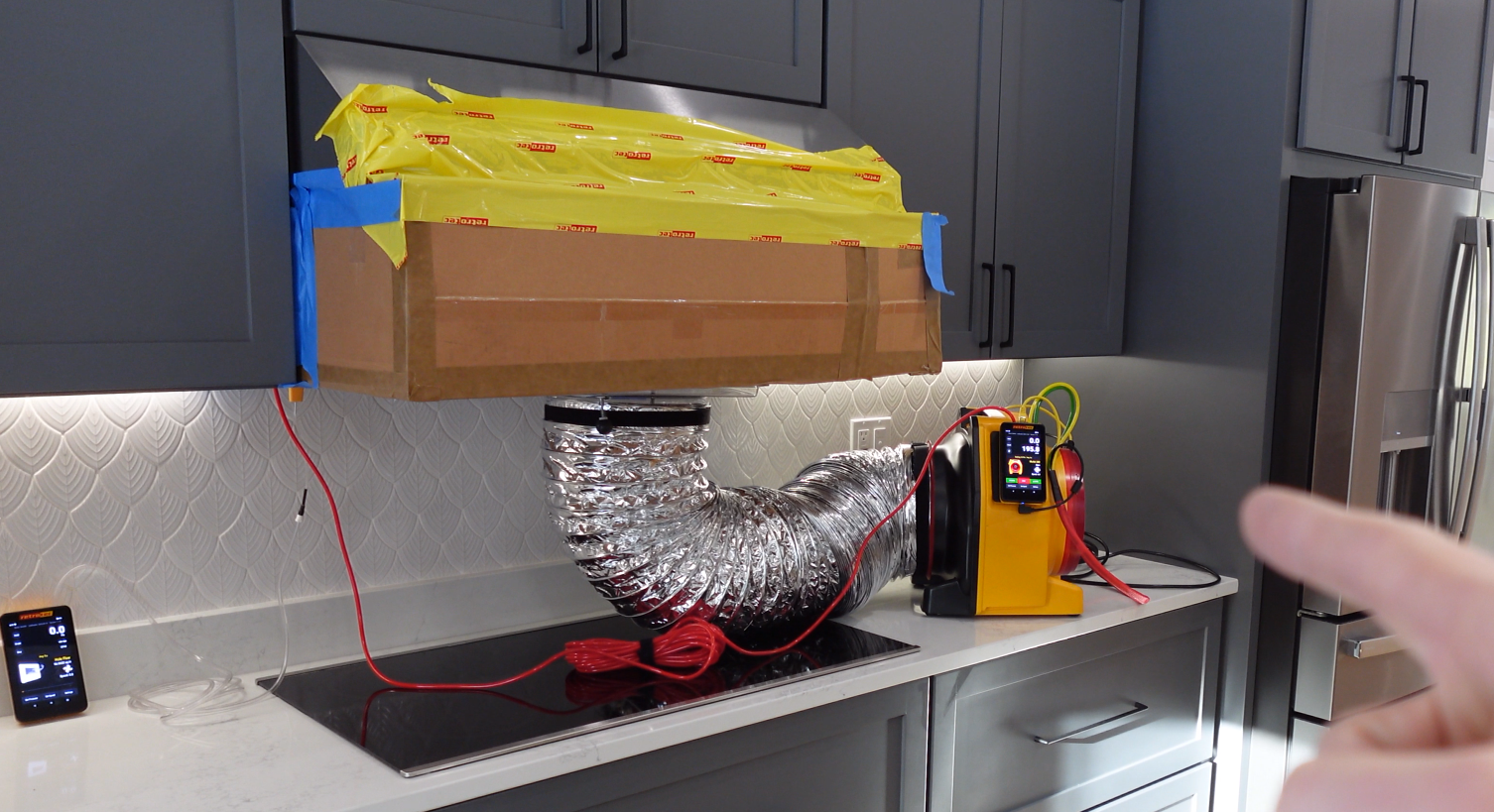
Blower door testing can also be combined with other diagnostic tools to locate the actual sources of leakage.
You can also find more of my testing videos and project work on my YouTube channel.
Thermal Imaging and Building-Envelope Diagnostics
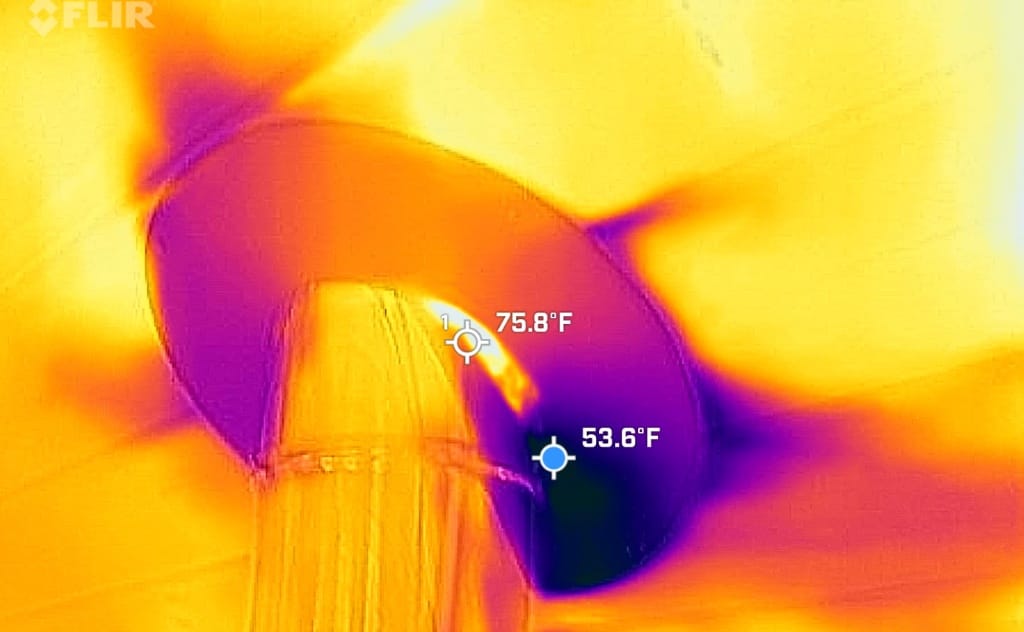
Thermal imaging can be a very useful diagnostic tool when used alongside an understanding of building science.
An infrared camera allows us to see differences in surface temperature that may indicate air leakage, missing or poorly installed insulation, thermal bridging, moisture concerns, or other building-envelope issues.
The important part isn't simply taking a thermal image. It is understanding what that image is telling us and confirming the suspected problem through additional investigation when necessary.
Ventilation Testing and Balancing
Modern homes are increasingly airtight, which makes controlled ventilation more important.
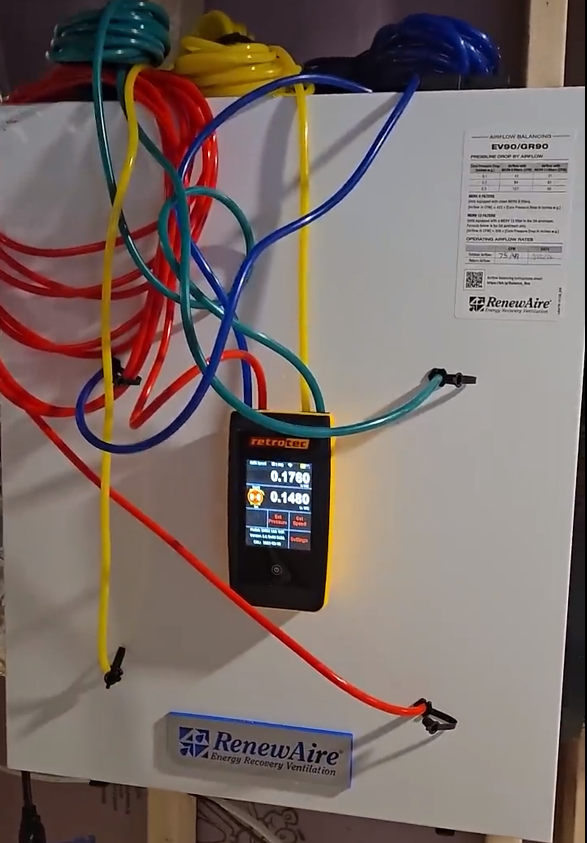
Energy-recovery ventilators and heat-recovery ventilators are designed to provide fresh air while exhausting stale indoor air. But simply installing a ventilation system does not guarantee that it is operating correctly.
Testing and balancing can help determine whether the system is delivering and exhausting the intended amount of air and whether the home is receiving proper ventilation.
Moisture Investigations
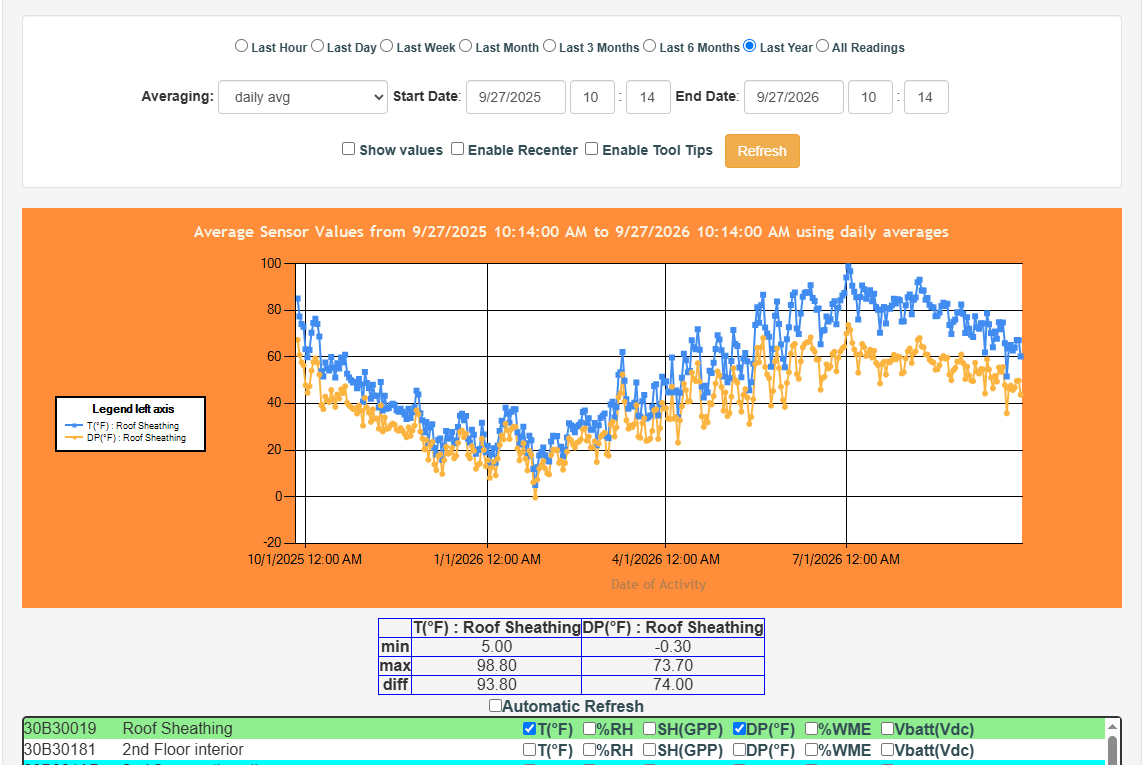
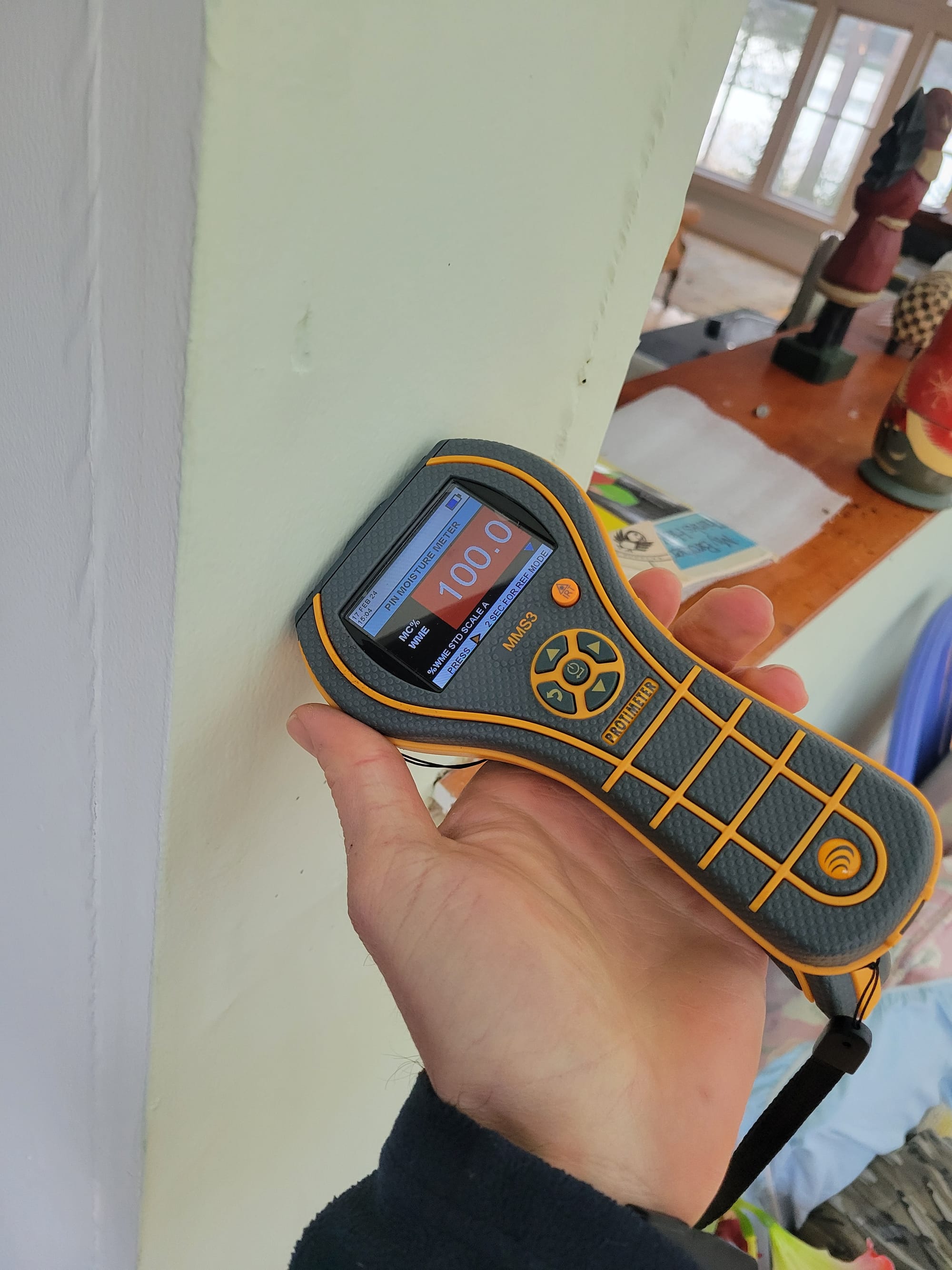
Moisture problems are often more complicated than they first appear.
Condensation, elevated indoor humidity, water intrusion, air leakage, insulation deficiencies, and ventilation issues can all contribute to moisture problems.
My approach is to look at the building as a complete system and use the appropriate diagnostic tools to help determine what is actually happening before recommending a solution.
Experience From Building a High-Performance Home
A significant part of my experience also comes from actually building a high-performance home.
The project documented at 18 Woodland Grove was designed and constructed using Pretty Good House principles, with a focus on airtightness, insulation, durability, comfort, and long-term efficiency.
The home incorporates a highly insulated and airtight building envelope, triple-pane windows, ducted heat pumps, balanced mechanical ventilation, and dedicated humidity control. Testing documented the home at approximately 0.23 ACH50, demonstrating an exceptionally tight building envelope.
That project gave me the opportunity to look at building performance from both sides: not only as someone testing homes after they are built, but as the person making the construction decisions that determine how a home ultimately performs.
That experience continues to influence the way I approach testing and diagnostics today.
Why This Site Exists
There is a lot of information available online about energy efficiency and building science, but homeowners are often given conflicting or overly simplified advice.
My goal with this site is to share practical information based on actual testing, construction experience, and field observations.
Future articles will cover topics such as:
- how to interpret blower-door results
- what ACH50 actually means
- common air-leakage locations
- thermal imaging and its limitations
- ERV and HRV balancing
- humidity and moisture control
- insulation and air-sealing strategies
- high-performance construction
- lessons learned from the 18 Woodland Grove project
Some articles will be technical. Others will simply explain common building-performance issues in a way that homeowners can understand.
Either way, the goal will be the same: measure first, understand the building, and make informed decisions based on how the home is actually performing.
Follow Along
SBC Testing will continue to grow as I add articles, testing examples, videos, and lessons learned from projects in New Hampshire and Maine.
You can also explore some of my earlier work through MWV Blower Door Test, the 18 Woodland Grove project, and my YouTube channel.
If you are interested in blower-door testing, building diagnostics, ventilation testing, moisture investigations, or high-performance residential construction, I hope this site becomes a useful resource.

 SERVING ALL OF NEW HAMPSHIRE